Introduction
On June 28, 2006, Alaskan Senator Ted Stevens uttered those famous words about the internet being a series of tubes. There was a backlash of responses from the internet community contesting that Senator Stevens was completely wrong. They said the internet was NOT a series of tubes. Well, it turns out that both Senator Stevens and the angry netizens are correct. The early internet was indeed a series of tubes, with connections between several US Universities. Since that time, the backbone of the internet has been replaced by more efficient pipes carrying dihydrogen monoxide.History
The Advanced Research Projects Agency (ARPA) was created after the USSR successfully launched Sputnik into orbit around the Earth. Thus began the Cold War, and it became necessary to create a resilient network between computers around the United States in the event of a nuclear war with Russia.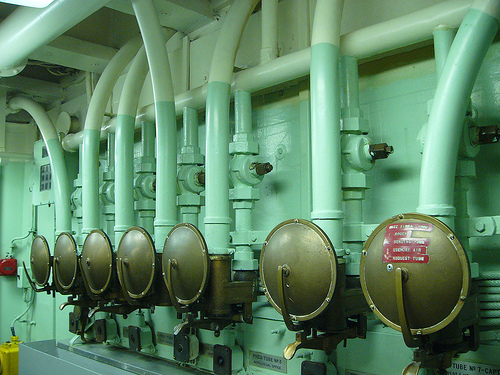
Searching for an answer to this problem, one researcher came up with the solution while watering his lawn. He noticed that the stream of water from his garden hose would be an ideal way to transfer information. He surmised that the stream of liquid could be given an electrical charge which could be read by a computer. Instead of using pneumatic tubes and sending information one packet at a time, he suggested using fluid filled pipes to "stream" these pieces of information to their destination.
This idea was applauded, and scientists now searched for a medium which would fill the pipes. It needed to be a fluid that was readily available, and could hold an electical charge. Dihydrogen Monoxide was selected because of its stable nature and abundent quantity on Earth.
Shortly after this development, the pneumatic tubes were replaced with the more efficient dihydrogen monoxide filled pipes. These pipes still exist today, and comprise the backbone of the internet as we know it.
Terminology
Anchor Tag - In HTML, the anchor tag <A>, is used to link to another section of the current page, or another page alltogether. The tag is typically drawn as a ship's anchor in HTML editing programs, making reference to the ocean-like fluid nature of dihydrogen monoxide.Bit Bucket - Bit buckets are typically used to capture dropped packets, thus saving the valuable dihydrogen monoxide. After a sufficient number of dropped packets are captured, they can be recycled back into the internet.
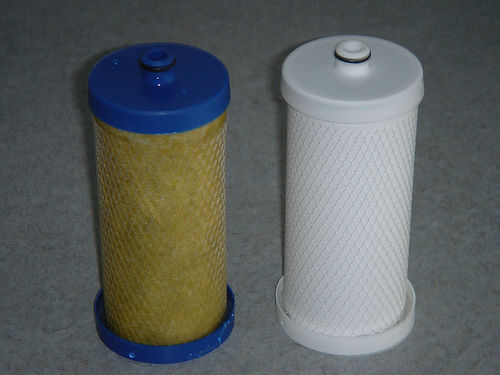
Congestion Control - The pipes connected to the internet can become congested due to contaminants entering through unmonitored connections. Congestion can be mitigated by installing filters that capture the contaminants before they are allowed too far into the internet. These filters must be periodically changed by qualified technicians.
DHCP - Dihydrogen Monoxide Configuration Protocol. This protocol is responsible for giving unique addresses to devices attached to the internet.
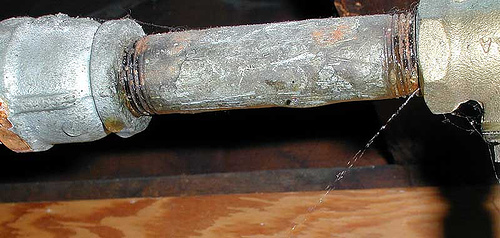
Fat Pipe - The diameter of one's connection to the internet determines the amount of data that can pass through. Having a fat pipe means that the diameter of the connection is wide and thus a great amount of dihydrogen monoxide can flow through making the connection very fast.
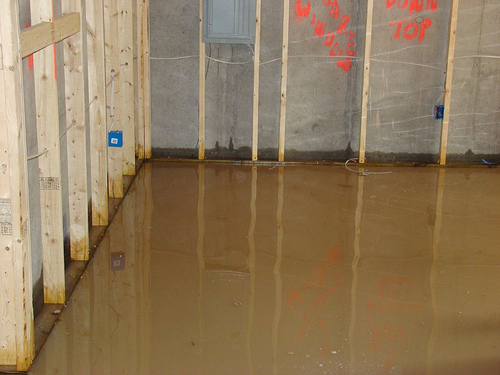
Flow Control - A series of valves connected to the pipes that comprise the internet which help to alleviate floods.
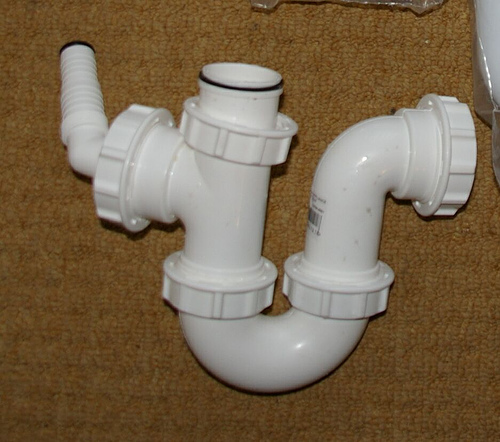
Packet Switching - In the old internet, using pneumatic tubes, this refers to the act of taking a packet out of the receiving tube and placing one in the sending tube.
Ping / Echo - Similar to the sonar of a submarine, a ping over the internet sends a sound wave through the dihydrogen monoxide. The echo of the ping is listened for, and the round trip time from source to destination can be computed.
Streaming Protocol - A method of sending a continuous stream of dihydrogen monoxide though the pipes of the internet.
Surfing the Net - Widely used in the 90s, but seldom used today, this refers to the act of going from webpage to webpage, an act similar to surfing on the dihydrogen monoxide flowing around the internet.
TCP - Trickle Control Protocol. One of a group of protocols that regulate the flow of dihydrogen monoxide in the internet.
Torrent - Made popular by the BitTorrent protocol, this is a method of quickly transferring large amounts of dihydrogen monoxide across the internet. The files used to initiate such transfers are also called torrents.
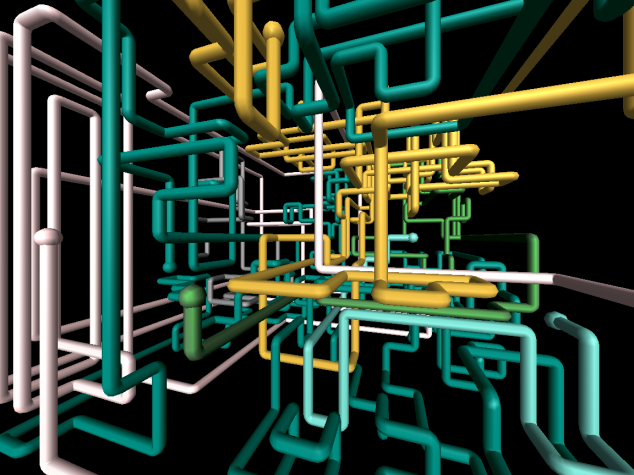
UDP - Universal Drip Protocol. One of a group of protocols that regulate the flow of dihydrogen monoxide in the internet.
Valve - The name of a popular video game development company, which references the numerous valves connected to the pipes that comprise the internet.

